
























Agents backdated documents to punish legal deductions.
By the Editorial Board, Sept. 29, 2023 | From: The Wall Street Journal
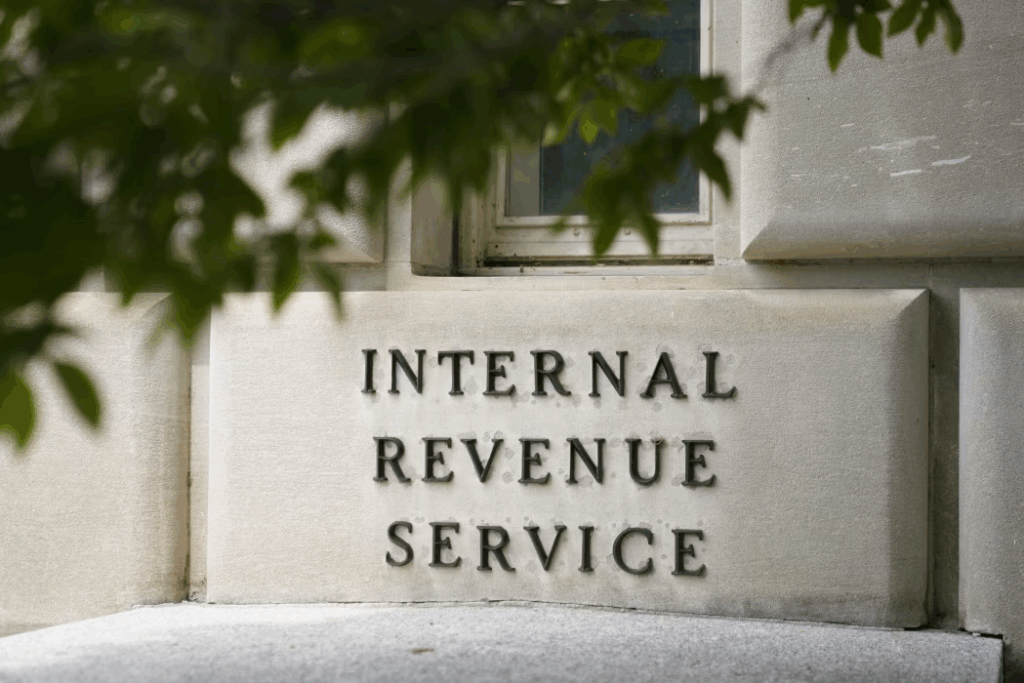
The Internal Revenue Service makes clear that taxpayers who willfully conceal or alter tax documents risk severe penalties. But what happens when government auditors are caught manipulating documents and hiding those actions in court?
The Internal Revenue Service makes clear that taxpayers who willfully conceal or alter tax documents risk severe penalties. But what happens when government auditors are caught manipulating documents and hiding those actions in court?
The IRS this month agreed to settle and drop a penalty in Lakepoint Land II LLC v. Commissioner. A judge in U.S. Tax Court had sanctioned the IRS in the case, ripping the agency’s counsel for acting in “bad faith” and having “multiplied the proceedings in this case unreasonably and vexatiously” by failing to tell the court that documents it used to assess a penalty had been backdated.
Several other Tax Court cases suggest wider IRS document fiddling as the agency has gone after “syndicated conservation easements.” Congress created conservation easements in the 1980s, letting land owners donate the development rights for acreage to a qualified charity in return for a tax deduction.
Those easements have become big business, as legal tax loopholes often do. Companies buy up land, have it appraised for its foregone developmental value, then sell stakes to investors who receive the tax benefit. This entirely legal commerce is disliked by the green lobby and some lawmakers.
The IRS began its crackdown in 2016, and by 2020 former Commissioner Charles Rettig had declared it a “top priority” to “actively identify, audit and litigate” these transactions that “defraud the government of revenue.” The IRS zeroed in on what it claimed were inflated land appraisals, denying deductions and slapping firms with hefty penalties.
One legal rub: The federal tax code requires an IRS supervisor to approve in writing the initial determination of a penalty. That didn’t happen in Lakepoint. The company presented emails to Judge Christian Weiler showing that the IRS agent on the case failed to get her supervisor’s written approval in 2016 for a proposed $15 million penalty.
When the agent realized this—in February, 2017—her supervisor acknowledged in an email that this was a “HUGE oversight” and backdated her signature to seven months earlier. IRS attorneys nonetheless swore to the accuracy of this date, and they continued to mislead the court for months even after the falsification was discovered. Judge Weiler ordered the IRS to pay Lakepoint’s fees and expenses.
Three more partnerships—Arden Row Assets, Basswood Aggregates, and Delwood Resources—have presented evidence of similar backdating by a different IRS agent and manager. That agent in a March 2022 email tells the manager that “the date you use to sign should either be the date you ‘approved’ penalties against the taxpayer (7/14/21) . . . or a little thereafter?” The manager a few days later responded: “All 3 are signed with date of July 14, 2021.” Note the wink-nod “approved.”
The cases suggest a culture of disregard for tax laws that the IRS requires taxpayers to follow to the tee. Imagine the fines or prison sentences awaiting average Joes who backdate tax documents and lie about it.
IRS abuse is all the more outrageous because the partnerships had the legal right to engage in easements at the time. Congress has since tightened the rules, and perhaps it should eliminate the loophole. But as long as they are legal, the job of the IRS isn’t to change the law through enforcement. According to a recent analysis in the publication Tax Notes, of the cases in which the Tax Court has ruled on valuations, judges have upheld some 81% of reported deductions.
In addition to settling with Lakepoint, the IRS says it has “undertaken an ongoing review of syndicated conservation easement cases to ensure that the evidentiary record about supervisory approval is properly presented and that the agency pursues or continues to pursue penalties only where appropriate.”
Glad to hear it, but it’s a disgrace that the IRS had to be found out in court before it stopped its abuses. This is one of many reasons the recent $80 billion budget increase for the IRS should be eliminated.
A federal grand jury in Philadelphia, Pennsylvania, returned an indictment in July, which was unsealed yesterday, charging a South Carolina man with tax evasion and attempting to obstruct an IRS civil audit and an IRS criminal investigation.
According to the indictment, Wayne M. Garvin, currently of Columbia, South Carolina, and previously of Philadelphia, allegedly filed individual income tax returns for the years 2012 through 2016 on which he claimed fraudulent deductions and expenses, including charitable contribution deductions and expenses associated with rental properties that he owned for some years. For the year 2013, Garvin also allegedly claimed he had expenses associated with service in the U.S. Army Reserves even though he did not perform any reservist duty that year. At the time Garvin filed his false tax returns, he was employed as a Supervisory Associate Advocate with the IRS’s Taxpayer Advocate Service in Philadelphia.
The indictment also alleges that after the IRS began an audit of Garvin’s 2013 and 2014 tax returns, Garvin submitted fraudulent documents to the IRS revenue agent conducting the audit. Among other fraudulent documents, Garvin allegedly created receipts from a church, invoices from a contractor and a letter from the Department of the Army in an attempt to convince the IRS he was entitled to claim the deductions and expenses on his returns. Garvin allegedly submitted the fraudulent documents to the IRS to prevent the IRS from assessing additional taxes against him for 2013 and 2014. Finally, the indictment alleges that after the IRS notified Garvin that he was under criminal investigation for filing false tax returns, Garvin provided the same fraudulent documents to IRS Criminal Investigation that Garvin previously provided to the IRS revenue agent.
Garvin is charged with three counts of tax evasion and two counts of corruptly endeavoring to impair and impede the due administration of the internal revenue laws. The defendant made his initial court appearance today. If convicted, he faces a maximum penalty of five years in prison on each count of tax evasion, and a maximum penalty of three years in prison on each count of endeavoring to impair the internal revenue laws. A federal district court judge will determine any sentence after considering the U.S. Sentencing Guidelines and other statutory factors.
Acting Deputy Assistant Attorney General Stuart M. Goldberg of the Justice Department’s Tax Division and Acting U.S. Attorney Jennifer Arbittier Williams of the Eastern District of Pennsylvania made the announcement.
IRS Criminal Investigation is investigating the case.
Trial Attorney Melissa S. Siskind of the Justice Department’s Tax Division and Assistant U.S. Attorney Tiwana Wright of the U.S. Attorney’s Office for the Eastern District of Pennsylvania are prosecuting the case.
An indictment is merely an allegation, and all defendants are presumed innocent until proven guilty beyond a reasonable doubt in a court of law.

SAN FRANCISCO – A federal criminal complaint, filed on February 4, 2019, was unsealed in San Francisco today, charging John C. Fry with unlawful disclosure of Suspicious Activity Reports, announced United States Attorney David L. Anderson and United States Department of the Treasury, Treasury Inspector General for Tax Administration (TIGTA), Special Agent in Charge Rod Ammari.
According to the affidavit filed in support of the complaint, Fry, 54, of San Francisco, unlawfully accessed and disclosed Suspicious Activity Reports (SARs) and SAR information pertaining to an individual taxpayer and a company owned by the taxpayer. Fry was an Investigative Analyst for the IRS’s law enforcement arm, the Criminal Investigation Division, in San Francisco. In this position, Fry had access to various law enforcement databases including the Financial Crimes Enforcement Network (FinCEN), Palantir, and the Integrated Data Retrieval System.
The TIGTA investigation revealed that in May 2018, Fry logged on to FinCEN and Palantir from his work computer and conducted numerous searches related to the taxpayer who was a New York attorney. Fry then disclosed the SAR information to an attorney based in Newport Beach, Calif. On May 8, 2018, the attorney used a public Twitter account to circulate a dossier releasing confidential banking information related to the taxpayer and the taxpayer’s company. The SAR information that was passed to the Los Angeles attorney was published in the Washington Post on May 8, 2018. The Los Angeles attorney put Fry in contact with an investigative reporter in New York which led to confirmation of the confidential banking information and an interview, which was published in The New Yorker on May 16, 2018.
The criminal complaint charges Fry with violating 31 U.S.C. § 5322(a), which prohibits unauthorized disclosure of information from SARs. Fry appeared before the U.S. Magistrate Judge Laurel Beeler in federal court in San Francisco on February 21, 2019. He was released on a $50,000 bond. Fry’s next scheduled appearance is scheduled for March 13, 2019, at 9:30 am, before U.S. Magistrate Judge Joseph C. Spero for preliminary hearing or arraignment on indictment.
A complaint merely alleges that crimes have been committed, and all defendants are presumed innocent until proven guilty beyond a reasonable doubt. If convicted, the defendant faces a maximum sentence of five years and a fine of $250,000 for a violation of 31 U.S.C. § 5322. However, any sentence following conviction would be imposed by the court after consideration of the U.S. Sentencing Guidelines and the federal statute governing the imposition of a sentence, 18 U.S.C. § 3553.
The U.S. Attorney’s Office, Special Prosecutions/National Security Unit, is prosecuting the case. The prosecution is the result of an investigation by the TIGTA.
MEMPHIS, TN — Linda Williams of Memphis, Tennessee, an Internal Revenue Service (IRS) tax examiner, was indicted for defrauding the IRS by filing false tax returns for various taxpayers in the Memphis area. Williams claimed over $500,000 in false deductions for these citizens. Many of these citizens were unaware of the false deductions discovered on their tax returns. D. Michael Dunavant, U.S. Attorney, announced the indictment today.
According to the indictment, from 2015 to 2017, Williams executed a scheme to prepare and file false tax returns for friends and family members. The tax returns contained false deductions to inflate tax payers’ refunds. Specifically, these deductions were pertaining to medical expenses, charitable contributions and business expenses. Williams would then take a portion from the refunds and transfer the funds to her personal bank account.
Williams was indicted for filing 10 false tax returns. She faces up to three years imprisonment for this offense and a fine in the amount of $250,000. There is no parole in the federal system.
The Internal Revenue Service-Criminal Investigation and the U.S. Treasury Inspector General for Tax Administration investigated this case.
The charges and allegations contained in the indictment are merely accusations of criminal conduct, not evidence. The defendant is presumed innocent unless and until proven guilty beyond a reasonable doubt, and convicted through due process of law.
Assistant U.S. Attorney Damon K. Griffin is prosecuting this case on behalf of the government.
Memphis, TN – United States Attorney Edward L. Stanton III and Shelby County District Attorney General Amy Weirich announced today that 24 current and former employees of the Internal Revenue Service have been charged for crimes relating to fraudulently obtaining more than $250,000 in government benefits.
Thirteen of the current and former IRS employees have been charged federally with making false statements to obtain unemployment insurance payments, food stamps, welfare, and housing vouchers. All thirteen, individually charged in separate indictments, are alleged to have falsely stated that they were unemployed while applying for or recertifying those government benefits.
“According to the allegations in the indictment, while these IRS employees were supposed to be serving the public, they were instead brazenly stealing from law-abiding American taxpayers,” said U.S. Attorney Edward L. Stanton III. “These charges demonstrate our unwavering resolve to work with our law enforcement partners and hold accountable anyone who fraudulently obtains government benefits and violates the public’s trust.”
The 13 IRS employees charged are Angela Allison, 37; Jessica Davis, 35; Serina Gaither, 37; Lillian Hamilton, 36; Teresa Jenkins, 46; Joanne Johnson, 46; Angela Scales, 28; Dorothy Simmons, 35; Mary Weeks, 61; Evonna Yarbrough, 42, all of Memphis; Gale Baker, 54, of Cordova, TN; Shari House, 45, of Jackson, TN; and Talaria Mitchell, 35, of Southhaven, MS. Each has been charged with multiple counts of false statements, in violation of Section 1001 of Title 18 of the United States Code. A conviction under that statute can result in up to five years in prison.
The charges resulted from cooperation between numerous federal and state agencies. In addition to the U.S. Attorney’s Office and the Shelby County District Attorney General’s Office, the investigation involved the U.S. Department of Treasury Inspector General for Tax Administration; the U.S. Department of Labor Office of Inspector General, Office of Labor Racketeering and Fraud Investigations; the U.S. Department of Agriculture Office of Inspector General; the U.S. Department of Housing and Urban Development Office of Inspector General; the United State Marshals Service; the Tennessee Department of Labor and Workforce Development; the Tennessee Department of Human Services; the Shelby County Sheriff’s Office; and the Memphis Housing Authority.
Eleven other former and current IRS employees were charged by the District Attorney General’s Office with theft of property over $1,000, a class D felony.
“The taxes that we pay are supposed to support our nation and assist individuals in need, not free-loaders who are gaming the system,” said District Attorney General Amy Weirich. “Taxpayers can take comfort in knowing that we take these matters seriously and that we will prosecute these individuals to the fullest extent possible.”
The 11 charged by the state are Raya Banks, 47; Clara Cannon, 61; Alma Childers, 64; Cathryn Fair, 50; Robert Graves, 60; Mechell Hampton, 35; Nicole Nickson, 39; Diane Malone, 56; Myra Thompson, 32; Katina Thurman, 39; and Pamela Williams, 47, all of Memphis.
The federal cases are being prosecuted for the United States Attorney’s Office by Assistant United States Attorney Jonathan Skrmetti. The state cases are being prosecuted for the Shelby County District Attorney General’s Office by Kirby May.
# # # #
The charges and allegations contained in the indictment are merely accusations, and the defendants are considered innocent unless and until proven guilty.
BIRMINGHAM — Federal officials today announced arrests and charges in a stolen identity tax-refund scheme believed to involve more than $1 million in false claims and run by an IRS employee who was supposed to be assisting taxpayers experiencing problems resulting from identity theft.
A federal grand jury earlier this month indicted NAKEISHA HALL, JIMMIE GOODMAN and ABDULLA COLEMAN for their involvement in a 2008 to 2011 scheme operated out of Birmingham that involved stealing personal identity information from the Internal Revenue Service to create fraudulent tax returns and collecting the stolen refunds, announced U.S. Attorney Joyce White Vance, IRS Criminal Investigation, St. Louis Field Office, Special Agent in Charge Karl A. Stiften, and Treasury Inspector General for Tax Administration, Mid-States Field Division, Special Agent in Charge Ruben Florez. The indictment was unsealed with today’s arrests.
Hall, 39, is an IRS employee who worked in the Taxpayer Advocate Service office in Birmingham from July 2007 to November 2011. Since November 2011, Hall has worked in Taxpayer Advocate Service offices in Omaha, Neb., New Orleans, La., and Salt Lake City, Utah. Federal agents arrested Hall today in Holly Springs, Miss. Federal agents also arrested Goodman, 37, of Birmingham, at her Cherry Avenue residence. Coleman, 37, formerly of Birmingham, is already in state custody in Wisconsin on unrelated charges.
In conjunction with the arrests of Hall and Goodman, federal officials also unsealed charges relating to another co-conspirator, LASHON ROBERSON. The Government filed a five-count information in October charging Roberson, 36, of Pelham, with Conspiracy to Commit Mail Fraud Affecting a Financial Institution and four counts of Mail Fraud Affecting a Financial Institution.
“Taxpayers trust, and expect, that IRS employees, as a whole, will safeguard their most sensitive personal information. Taxpayers also must trust that IRS employees in the Taxpayer Advocate Service will not only protect their sensitive information but will actively assist them when it has been compromised by others,” Vance said. “An IRS taxpayer advocate who exploits that trust, and with full knowledge of the significant impacts of identity theft, uses her IRS access to compromise taxpayers’ identities and steal a million dollars from the U.S. Treasury is committing a particularly egregious crime that will not go unpunished,” Vance said. “I thank the TIGTA and IRS-CI investigators who worked diligently with my office to bring this case forward.”
“It is the Treasury Inspector General for Tax Administration’s mission to protect the integrity of the Internal Revenue Service and promote the fair administration of our federal tax system,” Florez said. “IRS employees must conduct themselves with the highest level of integrity and their conduct must be above reproach. IRS employees who commit aggravated identity theft, steal government funds and access taxpayer information without authorization cannot be tolerated,” he said. “TIGTA will work closely with the United States Attorney’s Office to hold individuals, particularly those in positions of public trust, responsible for their illegal activities.”
“Individuals who commit refund fraud and identity theft of this magnitude and with this degree of dishonesty and deceit deserve to be punished to the fullest extent of the law,” Stiften said. “IRS Criminal Investigation and our law enforcement partners remain vigilant in identifying, investigating and prosecuting those individuals who seek to willfully defraud the United States Treasury and blatantly disregard the victims of their schemes,” he said. “The bad acts of one IRS employee shouldn’t taint the great work done by the thousands of IRS employees who assist taxpayers each and every day.”
The December indictment charges Hall, Goodman and Coleman with conspiring with others known and unknown to the Grand Jury to commit bank fraud and mail fraud affecting a financial institution. The indictment also charges Hall with one count each of theft of government funds, aggravated identity theft and unauthorized access to a protected computer.
Hall, Goodman, Coleman and others conspired to defraud both the IRS and financial institutions, including Bancorp Bank, between January 2008 and November 2011, and used the U.S. mail to execute the fraud, according to the indictment. Hall, Goodman, Coleman and others also conspired to obtain money from Bancorp Bank and other financial institutions. Bancorp Bank and other financial institutions issue stand-alone debit cards for the purpose of accepting tax refunds.
The multi-year conspiracy was conducted as follows, according to the indictment:
Hall obtained individuals’ names, birth dates and Social Security numbers through unauthorized access to IRS computers. Hall used the personal identity information to prepare fraudulent income tax returns and submitted them electronically to the IRS. Hall requested that the IRS pay the refunds onto debit cards and directed that the cards be mailed to drop addresses that she controlled. Hall solicited and received drop addresses from Goodman, Coleman and other co-conspirators, who also collected the refund cards from the mail.
Hall activated the cards by using stolen identity information. She, Goodman, Coleman and other co-conspirators took the money off the debit cards at ATMs or used the cards for purchases. If the fraudulent returns generated U.S. Treasury checks rather than the requested debit cards, Hall and her co-conspirators used fraudulent endorsements in order to cash the checks. Hall compensated Goodman, Coleman and other co-conspirators by giving them a portion of the refund money, or by giving them refund cards for their own use.
The theft, aggravated identity, and unauthorized access counts relate to two specific taxpayers’ information that Hall accessed and used in 2010.
The conspiracy charge carries a maximum penalty of 30 years in prison and a $1 million fine. The maximum prison penalty for theft of government funds is 10 years in prison. Aggravated identity theft carries a mandatory two-year prison term, and unauthorized access to a protected computer carries a maximum five-year prison term. All three charges carry a maximum $250,000 penalty.
IRS-CI and TIGTA investigated the case, which Assistant U.S. Attorney Erica Williamson Barnes is prosecuting.
An indictment contains only charges. Defendants are presumed innocent unless and until proven guilty.
The FBI became close to correcting a mistake in the third and final warrant application renewal targeting onetime Trump campaign adviser Carter Page, but an FBI lawyer improperly altered a document to cover up that the bureau had erred in the previous filings.
In a report released on Monday, Justice Department Inspector General Michael Horowitz offered a detailed description of the actions taken by Kevin Clinesmith, a then-FBI lawyer who was part of special counsel Robert Mueller’s team, that led to the criminal referral reported two weeks ago.
Horowitz, who looked into allegations of Foreign Intelligence Surveillance Act abuse, found the FBI made mistakes and omissions in the Russia investigation but did not determine that political bias tainted the effort.
Clinesmith is not named in Horowitz’s report, but it is clear he is the “Office of General Counsel attorney” who had been acting in response to a question by an FBI agent that was part of the team investigating the Trump campaign.
00:0000:30
Subscribe to our new print magazine for more politics, deeper culture, better access
Watch Full Screen to Skip Ads
“Supervisory Special Agent 2,” who swore to an affidavit for all three FISA renewals against Page in 2017, told Horowitz’s investigators that on the third renewal he wanted “a definitive answer to whether Page had ever been a source for another U.S. government agency before he signed the final renewal application.”
While in contact with what was reportedly the CIA’s liaison, Clinesmith was reminded that back in August 2016, predating the first Page warrant application in October 2016, the other agency informed the FBI that Page “did, in fact, have a prior relationship with that other agency.”
An email from the other government agency’s liaison was sent to Clinesmith, who then “altered the liaison’s email by inserting the words ‘not a source’ into it, thus making it appear that the liaison had said that Page was ‘not a source’ for the other agency” and sent it to “Supervisory Special Agent 2,” Horowitz found.
“Relying upon this altered email, [Clinesmith] signed the third renewal application that again failed to disclose Page’s past relationship with the other agency,” Horowitz wrote.
Consistent with the Inspector General Act of 1978, Horowitz said he informed Attorney General William Barr and FBI Director Christopher Wray with “relevant information” about Clinesmith’s actions. The inspector general does not mention criminal referrals, but it has been reported that Clinesmith is now a subject of U.S. Attorney John Durham’s criminal inquiry into the origins of the Russia investigation. The reports also said Clinesmith left the FBI after being confronted by Horowitz over his actions.
In a section on seven “significant inaccuracies and omissions” in the first Page FISA warrant application, Horowitz said the FBI left out that Page had been approved as an “operational contact” for the other agency from 2008 to 2013 and that Page “had provided information to the other agency concerning his prior contacts with certain Russian intelligence officers, one of which overlapped with facts asserted in the FISA application.” Horowitz also found this other agency gave Page a “positive assessment,” which was not included in the FISA warrant applications.
The agency is not identified in the report, but sources told the Washington Post it was the CIA and Page told the Daily Caller that he believes it was the same agency. The CIA declined the latter outlet’s request for comment.
The initial FISA application and three renewals targeting Page required the approval of top members of the FBI, the Justice Department, and the Foreign Intelligence Surveillance Court, but they were also handled by lower-level officials. The initial warrant application was approved in October 2016, and renewals came at three-month intervals in January, April, and June 2017. Page was never charged with a crime as part of Mueller’s investigation, which failed to establish a criminal conspiracy between the Trump campaign and the Kremlin, and he has denied being an agent for Russia.
Early media reports about Horowitz’s report described Clinesmith as being a “low-level attorney,” but the inspector general previously described Clinesmith as “the primary FBI attorney assigned to [the Trump-Russia] investigation in early 2017.”
Clinesmith was an attorney with the FBI’s National Security and Cyber Law Branch. He worked under FBI General Counsel James Baker and Deputy General Counsel Trisha Anderson. He also worked on the Hillary Clinton email investigation and the Trump-Russia investigation. He was present in the FBI’s meeting in Chicago with Trump campaign adviser George Papadopoulos in February 2017, Papadopoulos told lawmakers. An Australian diplomat’s tip about Papadopoulos boasting to him that the Russians had damaging information about Hillary Clinton effectively prompted the FBI’s counterintelligence investigation into the Trump campaign, dubbed “Crossfire Hurricane,” in July 2016.
In a scathing July 2018 inspector general report on the FBI’s Clinton emails investigation, Clinesmith was criticized at least 56 times as being one of the FBI officials who conveyed a bias against Trump in instant messages, along with Peter Strzok and FBI lawyer Lisa Page, both of whom have left the bureau.
In a lengthy instant message exchange between Clinesmith and another FBI employee on Nov. 9, 2016, the day after Trump’s presidential victory, he lamented Trump’s win and worried about the role he played in the investigation into Trump and his campaign. “My god damned name is all over the legal documents investigating his staff,” Clinesmith said, adding, “So, who knows if that breaks to him what he is going to do?”
Other messages showed Clinesmith, listed in Horowitz’s report as “FBI Attorney 2,” expressed favor toward Clinton and said, “Viva le resistance” in the weeks after Trump’s win.
The July 2018 report shows Clinesmith claimed his messages reflected only his personal views and his work was unaffected by them, and Horowitz ultimately was unable to find “improper considerations, including political bias” improperly influenced any investigative decisions.
WASHINGTON—FBI Director Christopher Wray has ordered more than 40 changes in how the bureau seeks secret surveillance warrants and handles other matters after the Justice Department inspector general pointed out a series of flaws in the bureau’s efforts to monitor a former Trump campaign adviser.
The problems were so severe, national security officials said, they will require reforms to both Federal Bureau of Investigation policy and culture akin to those that followed the uncovering of post-9/11 civil-liberties abuses.
Some people involved in the investigation attributed the problems the inspector general unearthed to a rush to quickly investigate grave allegations and determine their veracity, but current and former officials largely agreed that some fixes are necessary.
Many of the changes—which are already being implemented—aim to improve the way FBI employees seek wiretaps under the Foreign Intelligence Surveillance Act, which requires that applications for surveillance be reviewed by a special court operating in secret.
The main issues identified by Inspector General Michael Horowitz stem from the surveillance of former Trump campaign adviser Carter Page, which began in October 2016, shortly after he had left the campaign. The warrant was renewed three times, and continued through much of 2017.
The FBI’s probe eventually became special counsel Robert Mueller’s investigation into Russian interference in the 2016 election and whether the Trump campaign was involved in it.
RELATED
Read the inspector general report here.
While Mr. Horowitz found that the bureau had sufficient justification to open the investigation, the problems occurred in how the FBI sought the warrant in the first instance and, especially, in the renewals.
Mr. Horowitz’s report said FBI agents withheld some information from the Justice Department and the FISA court that could have undercut allegations in their application, including about the reliability of a source they cited heavily. They also made inaccurate statements, which weren’t supported by the evidence they obtained, in the applications to the court, the report said.
Mr. Wray, a Trump appointee who has been running the bureau since August 2017, is requiring semiannual training for FBI employees who work on FISA surveillance and handle confidential human sources, building on Mr. Horowitz’s recommendations.
Justice Department Inspector General Michael Horowitz this week discussed his report on the FBI’s practices before the Senate Judiciary Committee on Capitol Hill.
PHOTO: JEFF MALET/ZUMA PRESS
also ordered changes to the human-source program that include providing more information about such sources on surveillance applications, creating new certifications for information originating from these sources, and requiring the sources’ handling agents to confirm the information.
Those changes, implemented shortly before Mr. Horowitz made his report public, were designed in part to address Mr. Horowitz’s criticism that the FBI didn’t confirm the language it used to describe Christopher Steele —a former British intelligence agent who was paid by Democrats to research Mr. Trump’s connections to Russia and also provided information to the FBI—with the FBI agent who served as Mr. Steele’s primary contact. The language was found to be inaccurate.
The surveillance application also didn’t include negative information the bureau received about the accuracy of Mr. Steele’s prior information and its inability to corroborate Mr. Steele’s Russia information when agents spoke to one of his primary sources, the report said.
Carter Page, a former Trump campaign adviser who was surveilled by the FBI.
PHOTO: CHIP SOMODEVILLA/GETTY IMAGES
The bureau also is tightening the process agents use to seek surveillance warrants to minimize mistakes, Mr. Wray said. And he is putting most politically sensitive investigations primarily in the hands of field employees who have applicable experience, rather than running them out of the offices of senior leadership at FBI headquarters, as the Russia investigation largely was in 2016. Any exceptions would need the deputy director’s approval.
Mr. Horowitz said that the earlier decision by FBI leadership to run the Russia investigation from FBI headquarters—which the officials defended as necessary to prevent leaks and allow for better coordination with other agencies—made it more difficult to quickly deploy investigative resources.
“The FBI will take appropriate disciplinary action where warranted” against remaining employees who were involved in seeking to monitor Mr. Page, Mr. Wray said, offering no timeline and noting that many of the main officials described in the report have been fired, resigned or otherwise left the agency.
Mr. Wray could seek to remove low-level agents involved in the surveillance applications for Mr. Page from national security work, according to people familiar with the process.
The reforms proposed by the FBI would affect only how the bureau handles the drafting of warrants. Any wholesale changes would need to be approved by Congress, which set up the Foreign Intelligence Surveillance Court in 1978.
Still, further changes could be in the offing. A federal prosecutor appointed by Attorney General William Barr is conducting a separate, criminal investigation into some of the same issues the inspector general examined. Mr. Barr has said the review could mean changes in the way the government opens politically sensitive counterintelligence probes.
And several Republican members of Congress, who have long been supporters of the national security authorities given to the government, have indicated increased skepticism of the overall FISA system and hinted that they may support reforms or allow some of the existing parts of the law to lapse when they are up for renewal.
Carrie Cordero, a former national security lawyer in the Justice Department now at the Center for a New American Security, said: “I’m very concerned about the direction that the FISA debate is going.
“On one hand, there have been individuals who have long been critics of FISA who view this as an opportunity to propose and eventually obtain a whole realm of changes and restrictions to the law that they want,” she said. “And that is converging with the fact that FISA is being used for political purposes—or being maligned for political purposes—by people who know that it’s an important authority for national security but are doing it anyway.”
Agents are privately concerned that the internal changes might make it overly cumbersome to conduct the kind of electronic surveillance crucial in national security investigations, said Frank Montoya, a former FBI counterintelligence official who is in contact with current employees.
“Everyone recognizes the changes must be made, but people are also concerned that it’s just going to make it harder to do their jobs,” he said. And there is concern within the bureau that political pressure will mean harsher punishments for some employees, he said: “We get it, but at the same time, there’s a lot of fear.”
—Dustin Volz and Byron Tau contributed to this article.
Write to Sadie Gurman at sadie.gurman@wsj.com and Aruna Viswanatha at Aruna.Viswanatha@wsj.com
Justice Department lawyers have improperly used requests for overseas evidence to buy more time to bring some fraud cases, a memo filed with the agency’s internal watchdog alleges.
The document, filed Friday and reviewed by The Wall Street Journal, accuses prosecutors of sending such a request to the U.K. when they already had access to similar information. It also says prosecutors delayed following up with their British counterparts, which, according to the author, former federal prosecutor Ankush Khardori, showed they didn’t urgently need that information.
Representatives of the Justice Department and its inspector general declined to comment about the memo.
If the allegations in the memo are determined to be true, they could indicate that the Justice Department has bent the rules in a way that damaged defendants’ rights. Suspects in many federal crimes can’t be charged more than five years after the crime has been committed. Such statutes of limitations were enacted to protect possible defendants from being accused long after a crime, when memories had faded and evidence may have disappeared.
Responses to mutual legal-assistance treaty requests, or MLATs, sometimes take months or years, so prosecutors can ask a federal judge under seal to suspend the statute of limitations for up to three years on a crime they are investigating while they seek foreign evidence for their case.
The statute can be subject to abuse, because the law doesn’t explicitly disallow MLATs’ use even if there are other ways to get the evidence and because the target of the investigation isn’t informed of the MLAT request, said Jeffrey Boles, a professor and chair of legal studies at Temple University’s Fox School of Business.
Mr. Khardori’s memo says, “The circumstantial evidence indicates that there was a deliberate effort to deceive the relevant judges into believing that [a Justice Department unit] had, in fact, made its requests for foreign evidence because of a legitimate interest in obtaining that evidence.” He adds, “The real purpose of the request and the application to the judge was to buy more time to build a case.”
The Justice Department approved 987 MLAT requests in 2017, compared with 1,178 in 2016. Those figures were up from 532 in 2015 and 497 in 2014, according to agency reports. The agency’s budget reports haven’t disclosed the number of requests granted in more recent years.
SHARE YOUR THOUGHTS
Should prosecutors have the ability to extend a statute of limitations by citing the need to pursue evidence located in foreign countries? Join the conversation below.
The allegations come as the Justice Department is dealing with a December inspector-general finding that the Federal Bureau of Investigation misled judges when it wanted to surveil a former Trump campaign adviser, Carter Page. By not presenting some evidence that was favorable to Mr. Page, the finding said, the FBI might have improperly targeted him. The Justice Department said in a court filing unsealed Jan. 23 that it should have discontinued Mr. Page’s surveillance far earlier than it did.
Mr. Khardori is separately under investigation by the inspector general for allegedly providing information to the media about another prosecution by the Justice Department, and had been on unpaid administrative leave. In a separate memo, he wrote that those allegations involved improper behavior by senior officials in the Fraud Section and entailed no classified information. The inspector general’s spokeswoman declined to comment on the alleged media leak.
Mr. Khardori said he resigned on Friday, and declined to comment further on the memos and his resignation.
In one internal meeting on the foreign-evidence requests, one prosecutor advised fellow attorneys “not to put ‘in writing’ anything that would suggest” that an evidence request was designed to delay the statute of limitations, Mr. Khardori said in the Friday memo. The people weren’t named in the memo, and the Justice Department and its inspector general declined to comment on the matter.
The document describes two cases in which prosecutors allegedly misused such requests to give themselves more time: one that targeted Barclays PLC’s former global head of fixed-income and currencies trading, Robert Bogucki, and another that involved former traders at Bank of America Merrill Lynch accused of using a manipulative trading tactic known as “spoofing.”
In the Barclays case, prosecutors sought information from the United Kingdom about a multibillion-dollar foreign-exchange trade for Hewlett Packard Enterprise Co. days before the statute of limitations for alleged wrongdoing related to that deal was set to expire in August 2016, according to court documents.
Barclays had actively cooperated with the Justice Department’s investigation and had already provided reams of related material. It also had a continuing commitment to assist authorities as part of an earlier settlement in 2012.
Attorneys for Mr. Bogucki, who was ultimately acquitted last year of front-running the transaction, asked the court in 2018 to look into the timing of the assistance request.
“Six weeks before she filed the MLAT, she was sitting on the hotel bill that she was asking for in the MLAT. She had it in her email inbox. That’s a remarkable set of facts,” Mr. Bogucki’s attorney, Sean Hecker, told a judge, referring to a prosecutor who dealt with the MLAT.
According to court records, the judge agreed there was cause for concern and ordered the Justice Department to provide documents to Mr. Hecker about the MLAT request. Mr. Hecker declined to comment on the allegations in the memo.
Days later, instead of turning over the documents, prosecutors obtained a superseding indictment to extend the statute of limitations using a different theory. After trial last March, Judge Charles Breyer dismissed the case, saying it didn’t appear to constitute a crime.
A Barclays spokeswoman declined to comment on the memo’s allegations.
Mr. Khardori said in the Friday memo that he raised the issue with several colleagues and sent them an article by a former national-security prosecutor that questioned the use of foreign-evidence requests. The colleagues were dismissive, he wrote. “The National Security Division wouldn’t recognize a statute of limitations if it punched them in the face. I give this guy no credit,” one responded, and the other added: “HAHAHAHAHHAAH!” according to emails reviewed by the Journal.
The people weren’t named in the memo. The Justice Department declined to comment on the matter.
In the spoofing case, Mr. Khardori writes that he and others concluded the MLAT shouldn’t be used for extending the statute of limitations.
In the spoofing case, Mr. Khardori writes in his Friday memo that an MLAT request was completed and, based on it, a federal judge issued an order giving the government more time to investigate. But he and others decided against relying on it because the MLAT appeared to have been used to buy more time for the government.
Eventually, the Justice Department settled on a different strategy to bring the case. The former traders were criminally charged in January 2018 and are scheduled to stand trial in October. A Bank of America spokesman declined to comment on the memo’s allegations.
Write to Aruna Viswanatha at Aruna.Viswanatha@wsj.com and Dave Michaels at dave.michaels@wsj.com
CFEG reports that United States Attorney, Brian J. Stretch, announced that on November 29, 2017, a former Department of Justice attorney pleaded guilty to two counts of obstruction of justice and one count of transportation of stolen property in a federal district court in the Northern District of California. https://oig.justice.gov/press/2017/2017-11-29.pdf
The guilty plea was accepted by U.S. District Maxine M. Chesney, following the filing of the charges in a criminal information. https://oig.justice.gov/press/2017/2017-11-29.pdf
According to the plea agreement, the Department of Justice (DOJ) attorney, of Washington, D.C., worked for the Civil Fraud Section of the Department of Justice from October 24, 2010, until April 12, 2016. https://oig.justice.gov/press/2017/2017-11-29.pdf
During that time, he worked on qui tam actions pursuant to which the government investigated companies suspected of breaking the law. By statute, qui tam complaints are filed under seal and therefore kept from public view until the court orders that the complaints may be made public. In his plea agreement, the DOJ attorney admitted that during the last month of his employment as a trial attorney with the Department of Justice, he began secretly reviewing and collecting sealed qui tam complaints that were not assigned to him. https://oig.justice.gov/press/2017/2017-11-29.pdf He admitted that after leaving the Department of Justice, he used the stolen information to improperly solicit clients that were the subject of the sealed complaints. He acknowledged that in one instance, he was successful in using the information from a sealed complaint to convince the subject of a lawsuit to retain him as an attorney to represent it in the lawsuit. The DOJ attorney also acknowledged he lied to the Department of Justice in documents he completed during his exit process regarding whether he stole the complaints. https://oig.justice.gov/press/2017/2017-11-29.pdf
The plea agreement also describes two occasions in which the DOJ attorney attempted to sell information to companies that were the subject of government investigations. https://oig.justice.gov/press/2017/2017-11-29.pdf On November 30, 2016, he offered to sell a complaint to the corporation named in the lawsuit. Then, between November 30, 2016, and January 31, 2017, he engaged in multiple conversations with a representative of the corporation to negotiate the sale of the sealed complaint for $310,000. https://oig.justice.gov/press/2017/2017-11-29.pdf Similarly, on January 23, 2017, this DOJ attorney contacted a second corporation and offered to mail to the representative a copy of the face sheet of the complaint. https://oig.justice.gov/press/2017/2017-11-29.pdf The DOJ attorney actually mailed a redacted copy of the face sheet and promised that, for a fee, he would provide the entire complaint.
The DOJ attorney was arrested on January 31, 2017, after traveling from the Washington, D.C. area to the San Francisco Bay area with a copy of a sealed complaint. On that day, the DOJ attorney believed he was meeting at a Cupertino hotel with a representative from a company with whom he would exchange the complaint for a duffel bag filled with $310,000. In fact, he was meeting with an undercover employee of the FBI. https://oig.justice.gov/press/2017/2017-11-29.pdf
Further, the DOJ attorney admitted that after his arrest, he took steps in an effort to obstruct the ongoing investigation. Specifically, after being released from custody, he returned to his office, purportedly to retrieve his personal belongings, and removed and destroyed documents from his office that he knew could further incriminate him. The DOJ attorney acknowledged he took these and additional other steps in an effort to corruptly obstruct the ongoing investigation and proceedings against him. https://oig.justice.gov/press/2017/2017-11-29.pdf
On November 1, 2017, the DOJ attorney was charged by information with two counts of obstruction of justice, in violation of 18 U.S.C. § 1505, and one count of interstate transportation of stolen goods, in violation of 18 U.S.C. § 2314. Pursuant to the plea agreement, the Defendant DOJ attorney pleaded guilty to all counts. https://oig.justice.gov/press/2017/2017-11-29.pdf
The maximum statutory sentence for each count of violating 18 U.S.C. § 1505 is five years in prison and a $250,000 fine. The maximum statutory sentence for a violation of 18 U.S.C. § 2314 is 10 years in prison and a $250,000 fine. Additional fines, victim restitution, and a term of supervised release also may be imposed. However, any sentence following conviction would be imposed by the court only after consideration of the U.S. Sentencing Guidelines and the federal statute governing the imposition of a sentence, 18 U.S.C. § 3553. https://oig.justice.gov/press/2017/2017-11-29.pdf
When Department of Justice attorneys engage in criminal conduct such as obstruction of justice and interstate transportation of stolen goods, the U.S. Department of Justice fails to enforce the laws with integrity and fairness to all.